- 1407 C. del Norte, Ste. 108, Laredo, TX 78041
- [email protected]
Commercial Ventilation
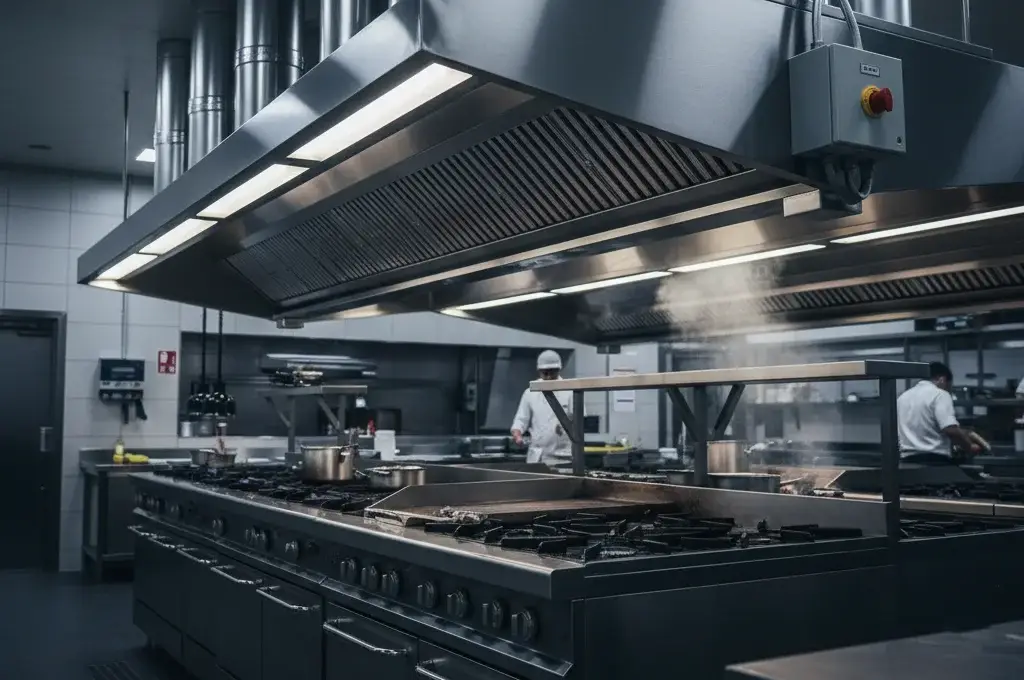
Your Kitchen Exhaust Failed Inspection. Now What?
The health inspector just flagged your ventilation system. Your employees are complaining about smoke and grease in the air. Your HVAC is working overtime because your exhaust fans aren't balanced. Sound familiar?
In South Texas, proper ventilation isn't optional—it's survival. Between commercial kitchen requirements, warehouse air exchange needs, and rising energy costs, you need a ventilation partner who understands the regulations AND the realities of running a business in Laredo.
Commercial Ventilation Solutions
Kitchen Exhaust Systems
Code-compliant hoods that pass health inspections
Make-Up Air Units
Balance your exhaust so your AC doesn't fight against it
Energy Recovery Ventilators
Recapture 30-50% of heating/cooling from exhaust air
Roof & Wall Exhaust Fans
Remove heat, smoke, and fumes from your space
Ductwork Design & Installation
Proper sizing and routing for maximum airflow
Air Quality Monitoring
Real-time CO2 and contaminant tracking
How We Work
Code-compliant ventilation, done right
1
Assessment
Airflow needs and code review
›
2
Design
Balanced system, meets regulations
›
3
Installation
Ready for inspection
›
4
Certification
Pass health & fire inspections
Frequently Asked Questions
-
What ventilation does my restaurant kitchen need?Restaurant kitchens require a balanced system with exhaust hoods over cooking equipment and make-up air units to replace exhausted air. We design systems that meet local fire codes and health department requirements while maintaining comfortable working conditions.
-
How can ventilation reduce energy costs?Energy recovery ventilators (ERVs) capture heat and humidity from exhaust air to pre-condition incoming fresh air. This can reduce HVAC energy consumption by 30-50% compared to systems without energy recovery, especially significant in South Texas heat.
-
Do you provide ventilation system maintenance?Yes, we offer maintenance programs for commercial ventilation systems including filter replacement, fan belt inspection, motor lubrication, and duct cleaning coordination. Regular maintenance ensures optimal airflow and prevents costly repairs.
-
How do I know if my building needs better ventilation?Signs of poor ventilation include stuffy air, lingering odors, condensation on windows, employee complaints of headaches or fatigue, and inconsistent temperatures throughout the building. We can perform air quality testing to assess your current ventilation effectiveness.
-
What are the code requirements for commercial ventilation?Texas building codes and ASHRAE standards specify minimum ventilation rates based on occupancy and building use. We design all systems to meet or exceed these requirements, and we're familiar with specific regulations for restaurants, healthcare facilities, and industrial applications.
-
Can ventilation improvements help with COVID and airborne illness?Yes, improved ventilation and filtration significantly reduce airborne pathogen transmission. We can upgrade filtration to MERV-13 or higher, add UV-C germicidal systems, and increase outdoor air intake to dilute contaminants and create healthier indoor environments.
"Fast and great service! 10 out of 10 recommend!"
Olivia Gonzalez
— Google Review